
Surgical Tray Verification
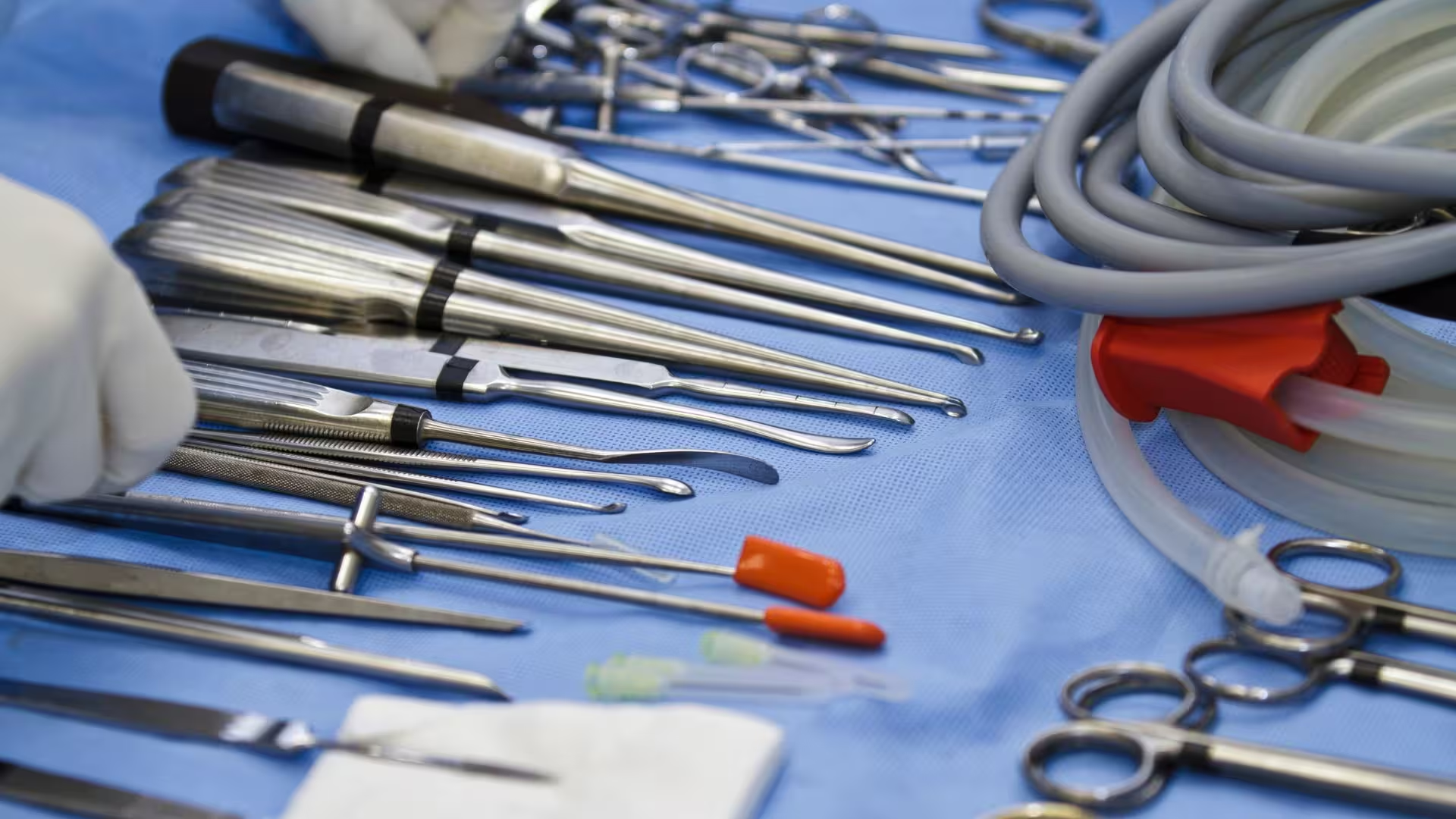
Surgical instruments and medical equipment move through sterile processing departments, operating theatres, field teams and customer sites.
At each stage, teams need to confirm that the right instruments are present, kits are complete and discrepancies are identified before equipment moves on.
For hospitals and medical device companies managing large numbers of trays, loan sets and field kits, these checks can create a significant manual verification workload.
Why Manual Verification Is Difficult
Instrument and equipment checks commonly rely on:
- Manual counting
- Printed or digital inventory lists
- Visual comparison by experienced staff
- Repetitive reconciliation
- Manual documentation of missing items
- Final checks before trays or kits are released
These processes depend heavily on staff attention and experience.
A missing instrument, incorrect tray configuration or incomplete field kit can lead to additional reprocessing, delayed procedures, unnecessary replacement costs or issues being discovered further downstream.
How Tiliter Helps
Tiliter allows hospitals, sterile processing teams and medical device companies to build image-based verification workflows around surgical trays and medical equipment kits.
Teams define what should be present in a specific tray or kit, and Tiliter Vision Agents analyse submitted images against those requirements.
Verification can include:
- Expected instrument presence
- Missing instruments
- Incorrect or unexpected items
- Instrument counts
- Tray or kit configuration
- Visible placement issues
- Required labels or identifiers
- Other visually verifiable requirements
Instead of manually reviewing every tray or kit, teams can focus attention on cases where something appears incorrect or requires further review.
The Workflow
1. Select the Tray or Kit
The workflow identifies which surgical tray, loan set, field kit or equipment configuration is being verified.
Different verification criteria can be configured for different procedures, products, hospitals or field teams.
2. Capture an Image
A staff member captures an image using a mobile device, workstation camera or other existing imaging setup.
The image becomes visual evidence of the tray or kit at that stage of the workflow.
3. Verify the Contents
Tiliter Vision Agents evaluate the image against the expected configuration.
The workflow can check whether required instruments are visible, identify missing or unexpected items and highlight differences that require human review.
4. Escalate Exceptions
When everything appears correct, the workflow can continue without additional manual image review.
When something is missing, incorrect or uncertain, the tray or kit can be flagged immediately for investigation or correction.
5. Create a Verification Record
Each completed check can create a structured record containing:
- Submitted image
- Verification outcome
- Detected discrepancies
- Tray, kit or set identifier
- Timestamp
- Workflow context
- Review history
This creates traceable visual evidence without relying solely on manual checklist completion.
Where It Can Be Used
Tray Assembly
Verify that the expected instruments have been assembled before the tray progresses to the next stage.
Final Set Verification
Add a visual verification step before completed trays are released for storage, sterilisation or distribution.
Theatre Return
Capture returned sets and identify visible missing instruments or discrepancies earlier in the process.
Loan Set Verification
Confirm the contents of surgical loan sets before dispatch, after procedures and when equipment is returned.
Field Inventory Checks
Field service, clinical support and surgical teams often travel with high-value equipment that needs to be checked before and after use.
Instead of manually counting every item against a checklist, staff can capture an image of the kit and use Tiliter to verify what is present.
This can support:
- Pre-departure inventory checks
- Equipment handovers
- Post-procedure reconciliation
- Customer-site inventory checks
- Missing-item detection
- Returned equipment checks
Exception Review
Automatically surface trays or kits requiring attention rather than asking staff to manually review every submitted image.
Audit and Traceability
Maintain timestamped image evidence alongside verification outcomes for internal review and process improvement.
Standardise Checks Across Distributed Teams
For medical device companies with field teams, inventory verification is often performed by many employees across different locations.
Tiliter provides a consistent verification process without requiring every person to manually reconcile complex equipment lists.
Teams capture the kit, submit the image and receive a structured verification result.
Operations teams can then see:
- Which kits were checked
- What was present
- Where discrepancies occurred
- When equipment was verified
- Which cases require follow-up
This creates a standardised inventory process across distributed teams while reducing repetitive manual checks.
Structured Operational Records
Every verification creates more than an image.
Tiliter converts visual evidence into structured operational data that can be searched, reviewed and integrated into existing workflows.
Over time, this can provide visibility into recurring discrepancies, missing equipment, tray-level exceptions and verification activity across hospital or field operations.
Built for Existing Workflows
Tiliter can operate as a complete visual verification workflow or integrate into existing instrument management, inventory and hospital systems.
Teams can use:
- Mobile phones and tablets
- Fixed cameras
- Existing workstation imaging
- APIs and webhooks
- Workflow assignments
- Automated exception handling
- Operational dashboards
The aim is not to replace existing instrument tracking or inventory systems.
Tiliter adds a visual verification layer at the points where people currently need to look at a tray or kit and decide whether it is complete and correct.
Why It Matters
Hospitals and medical device companies perform thousands of repetitive visual inventory checks.
Automating even part of that verification can reduce manual review, identify discrepancies earlier and create stronger evidence around every completed check.
Tiliter Vision Agents turn an image of a tray or equipment kit into a structured verification result and helping teams spend less time checking routine cases and more time resolving exceptions.
Test the Workflow
Upload images of surgical trays or medical equipment kits, define the expected contents and test image-based verification using the Tiliter Vision Agent Platform.